
ORTHOPEDICS

Orthopedics is a field of medicine that studies, prevents and treats ilnesses, deformities and injuries of locomotor system.
A team of top experts (surgeons) in the field of orthopedics offers the possibility of diagnosis and therapy of all diseases of the musculoskeletal system, as well as organ damage in children and adults.
With the help of state-of-the-art equipment and rich clinical experience, orthopedists and traumatology specialists of our partnering hospital can surgically treat most injuries to bones, joints and muscles, treat chronic degenerative and inflammatory changes of the musculoskeletal system, as well as perform all other types of surgical procedures, such as hip, knee, shoulder, foot and other surgeries.
HIP SURGERY
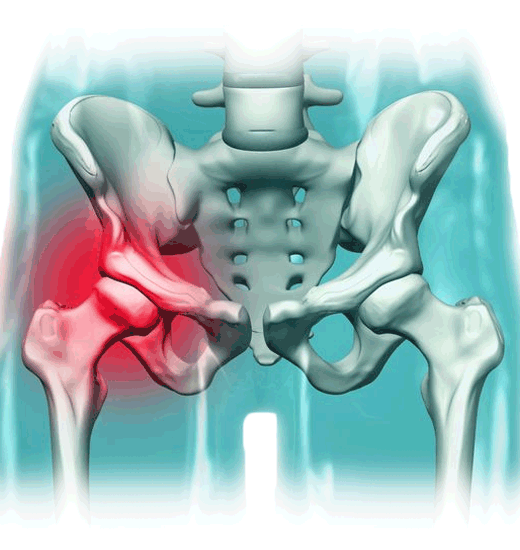
Hip surgery is usually the only choice for serious hip injuries or hip arthrosis, which often involve the installation of a prosthesis, or an artificial joint (artificial hip).
The hip belongs to the set of movable joints, being the largest and one of the most important joints, since it has a pivotal role in the development and preservation of the correct architecture of the entire locomotor system, i.e. bodily statics and symmetry.
HIP FRACTURE – HIP REPLACEMENT SURGERY
Depending on the location, type and severity of the fracture, the symptoms can be different, but in each case they involve pain of different intensity and limitation to (i.e. impossibility of) movement.
The team of orthopedic specialists of our partnering hospital performs the most complex and up-to-date interventions on the hip, with the aim of preserving its function and stability.
The treatment of hip fractures, depending on the clinical picture, can be either conservative or surgical.
Most often, surgical intervention (surgery) is necessary, and in some cases it may even be necessary to install an artificial hip.

HIP ENDOPROSTHESIS (ARTIFICIAL HIP)
Hip surgery – The most common reason for performing a total hip arthroplasty are hip osteoarthritis or fractures (either fresh or old).
What are the types of arthrosis?
In primary arthrosis, the cause of arthrosis is not known, while secondary arthrosis occurs due to rheumatic or similar diseases, post-traumatic conditions or previous surgeries.
Hip surgery with the installation of a total endo prosthesis (i.e. an artificial hip), is one of the most common and most successfully performed orthopedic surgeries performed in the hospital. Modern technologies for making hip prostheses, quality biomaterials and advanced surgical techniques all enable speedy postoperative recovery and complete disappearance of pain that patients suffered before the operation.
The types of hip prostheses
When choosing the type of prosthesis, each patient is approached individually, taking into account many factors. Some of the factors considered are the age of the patient, the degree of damage to the hip joint, anatomical characteristics, the expected degree of physical activity, the original disease or previous surgical interventions.
Cement-free hip prostheses are implanted in younger patients with an adequately preserved bone structure, that will grow into the prosthesis and gradually make it firm. This type of prosthesis is implanted in most of our patients.
The age of the patient is only one of the factors that influence the decision on the type of implant. Cement prostheses are used for elderly patients and patients with inadequate bone quality (most often osteoporosis).
REVISION OF TOTAL HIP PROSTHESIS (REVISED HIP SURGERY)
Total hip prosthesis revision (revised hip surgery) is nowadays a standard procedure, both in our partnering hospital and worldwide. With the increasing in the number of surgeries performed for the installation of total hip prostheses, there is also an increased incidence of revised hip surgeries.
Over time, there are small shifts in the bone bed and wearing off of the prosthesis material, causing pain when moving and possibly intensifying over time.
For these reasons, it is necessary to perform an orthopedic examination once a year and take an X-ray of the operated hip.
HOW IS THE HIP REPLACEMENT SURGERY PROCEDURE PERFORMED?
The surgery is performed after having conducted the pre-surgical preparation and taken a decision about the most adequate type of anesthesia (block, spinal or general).
It is important to note that the damage to the muscles is minimal, which enables speedy rehabilitation and a preservation of the hip function. The classic installation of a total endo-prosthesis usually takes about 90 minutes.
Being in a private hospital, you can quickly recover and return to the usual daily activities.
HOW IS THE PROCEDURE PERFORMED?
Being equipped with the most-up-to dated medical devices intended for surgery in orthopedics, our partnering hospital performs arthroscopy to conduct endoscopic hip, as well as minimally invasive knee and shoulder surgeries, under general or spinal anesthesia. Arthroscopy is also used in preliminary diagnostic and assessment of the joint’s internal condition.
In addition, the hospital can perform all the necessary diagnostics, as well as surgical procedures.
The orthopedic traumatology team of the hospital takes care of the patient from the beginning to the end of his treatment, performing even the most complex surgical procedures in the field of traumatology. The complete treatment program can, at patient’s request, include physiotherapy, as well as various accompanying programs carried out in rehabilitation centers.